
Quattro GP
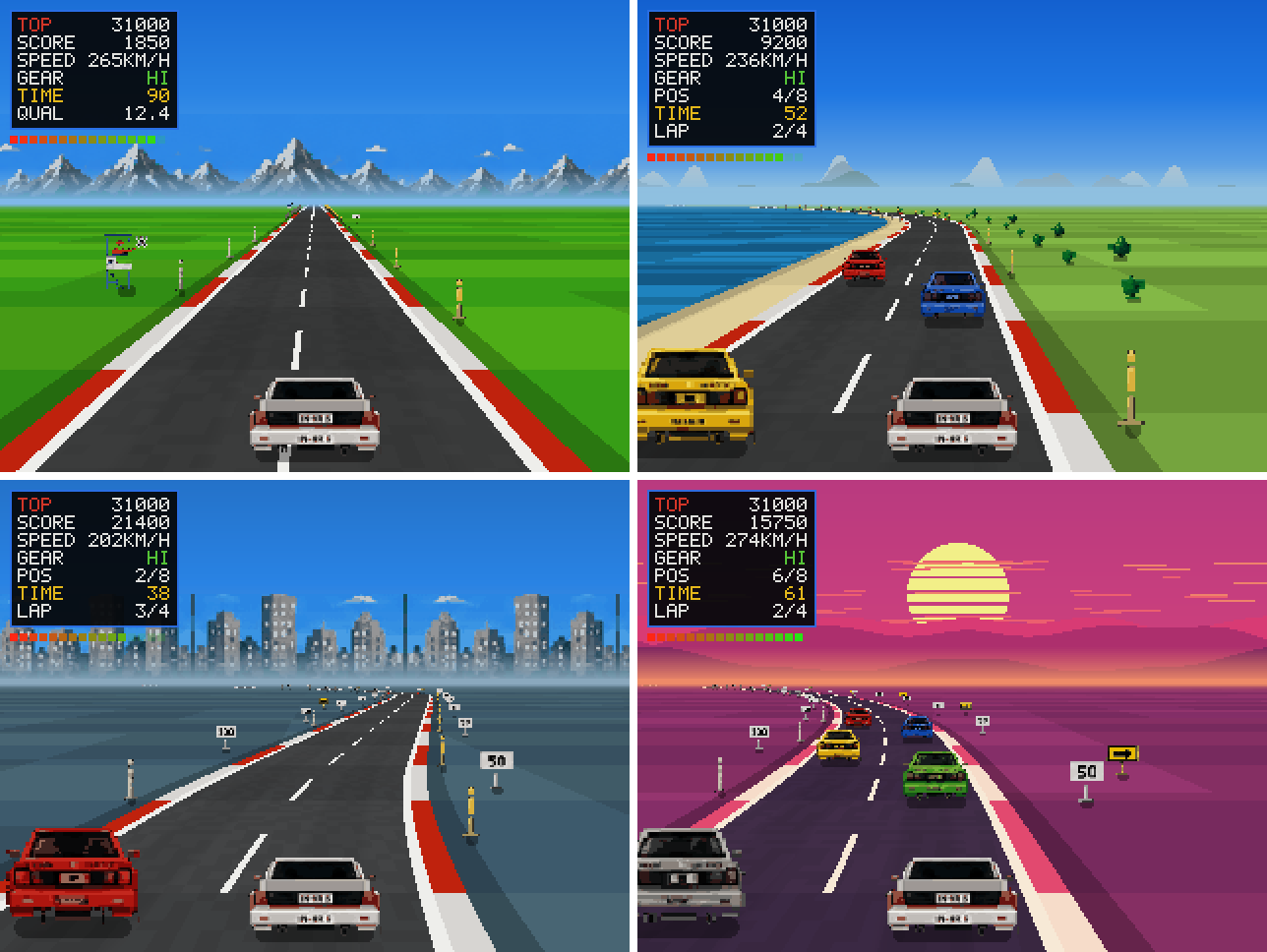
A 1982-style arcade racer for Omarchy 4's shell. Pixel-art sprites over a GPU-shaded road, rendered at 320x240 and magnified by a whole number of pixels. Four circuits, a qualifying lap, an eight-car field, checkpoint time extends, puddles that reflect each circuit's own sky and cost you grip at speed, and a five-deep ranking table per circuit — initials entered before you race, arcade style — that survives a shell restart.
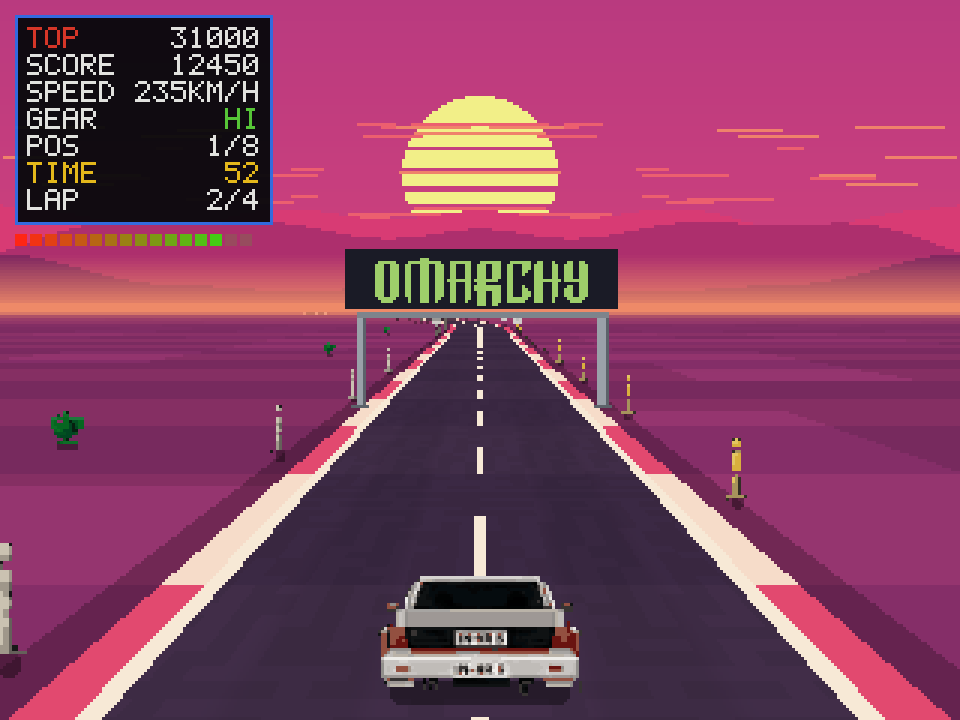
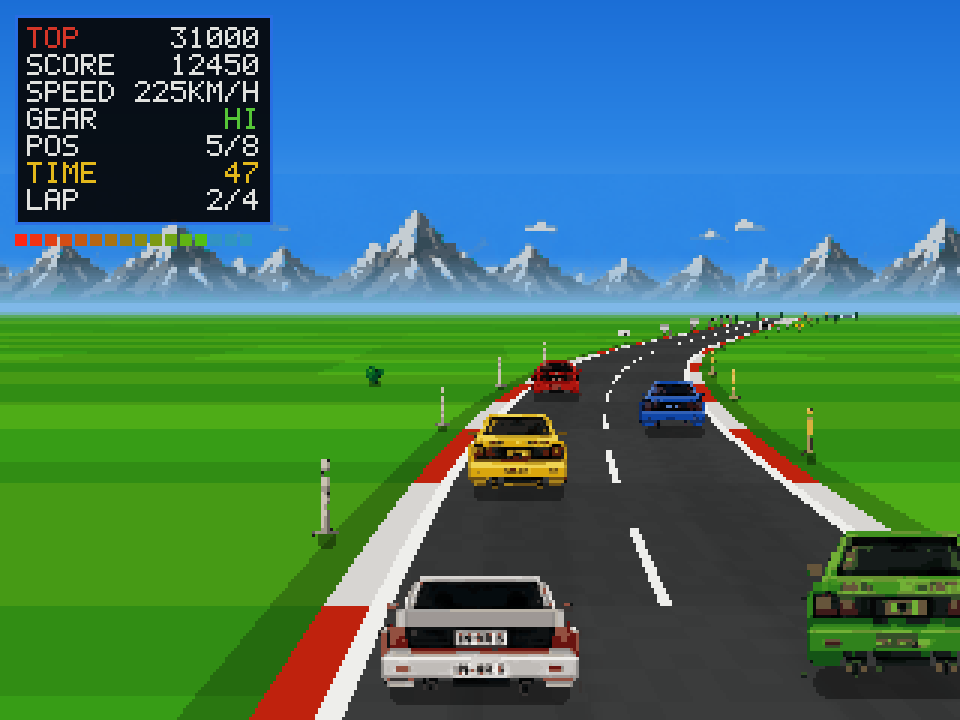
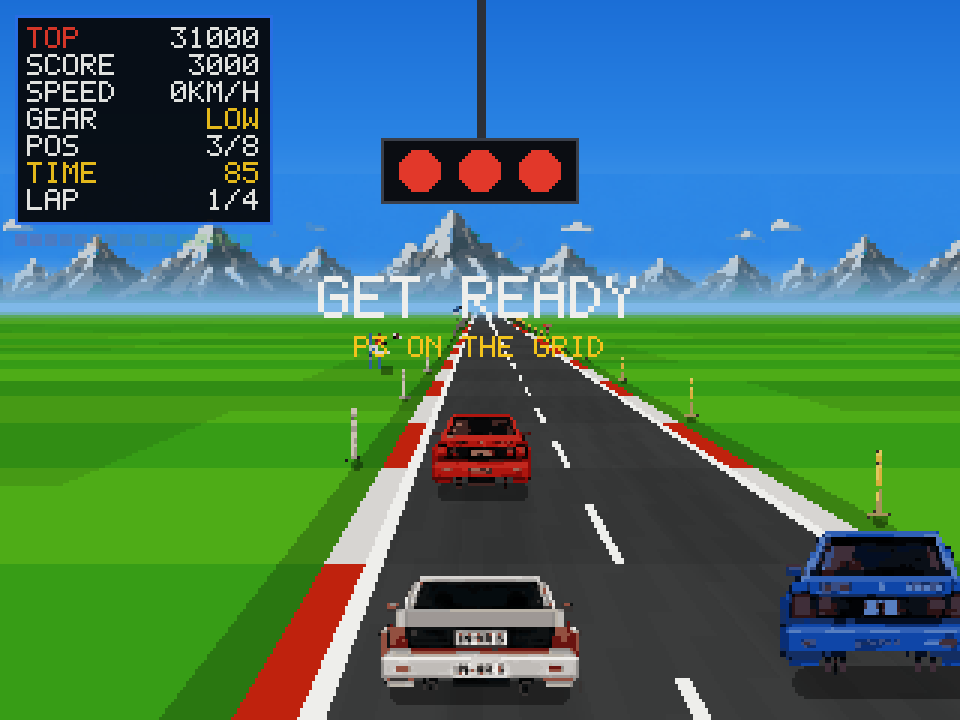
Three arches a lap — the sponsor board twice, and FINISH over the line:
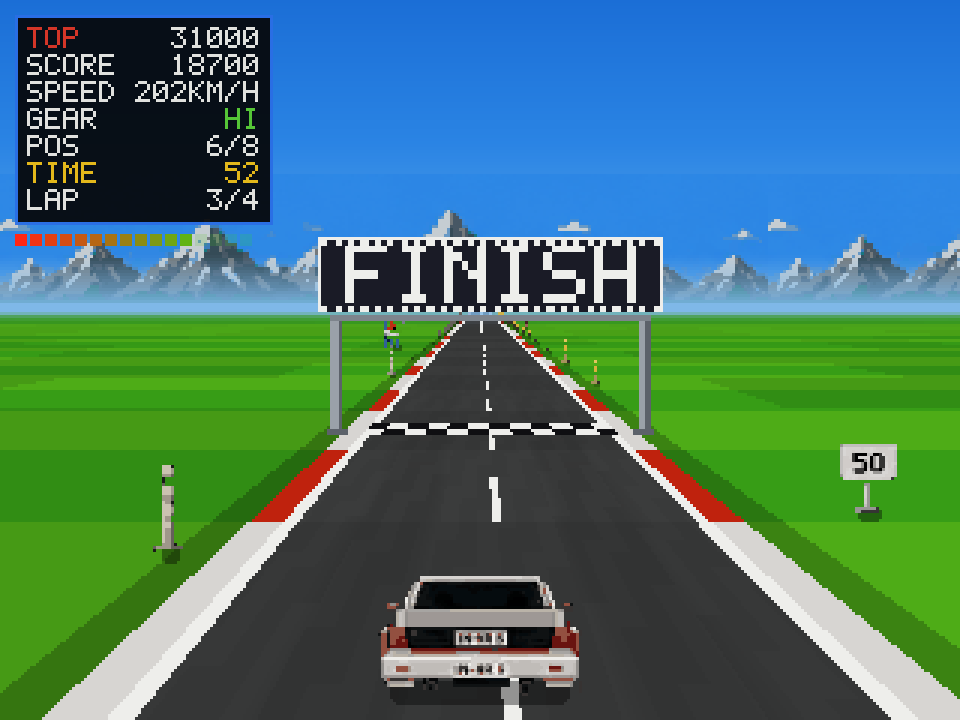
Four circuits — Fuji, Seaside, City and Sunset:
Install
omarchy plugin add https://github.com/28allday/Quattro-GP-Omarchy.git --enable
Then click the 🏁 in the bar, or:
omarchy-shell shell toggle nosignal.quattro-gp
To bind it to a key, add to ~/.config/hypr/bindings.lua:
hl.bind("SUPER ALT, G", "exec", "omarchy-shell shell toggle nosignal.quattro-gp")
Remove
omarchy plugin disable nosignal.quattro-gp
omarchy plugin remove nosignal.quattro-gp
The plugin keeps its ranking tables and driver name in
~/.local/state/quattro-gp/state.json; delete that too if you want the
scores gone. Nothing else is written anywhere, beyond the plugin's own
entries in ~/.config/omarchy/shell.json, which disable clears — run it
a second time if the bar icon was already gone.
Controls
| Key | Action |
|---|---|
| Left / Right or A / D | Steer — and pick the circuit, and spell your initials |
| Up / W / Z | Accelerate |
| Down / S / X | Brake |
| Space or Shift | Shift between LOW and HI |
| Enter | Open the course menu, lock a letter, start |
| Escape or Q | Back out of a menu; anywhere else, close the cabinet |
Closing the cabinet — Escape, or clicking outside it — pauses a race rather than losing it; reopening from the bar carries on where you were. Escape itself also resets to the title, so the 🏁 always greets you with a fresh cabinet.
How it plays
Say who is driving. Pick a circuit and the cabinet asks for three initials before you touch the track — left/right spins the letter, Enter locks it, and the name arrives prefilled with whoever drove last, so a returning driver is three Enters from the grid. A score that makes a circuit's top five files itself under that name, and the attract screen cycles the BEST DRIVERS table for whichever circuit is up.
Mind the lights. The field leaves on the green, and the game penalises a jumped start: throttle before the lights go green and the engine is held dead for two seconds while everyone drives away.
Shift gear. Two positions, like the cabinet's lever. LOW pulls hard off the line and dies at 168km/h; HI has nothing at low speed and everything at the top. Stay in LOW and a lap takes 94 seconds — you will not qualify. Shift up at around 100mph, as the arcade's own advice had it.
Qualify. Ninety seconds of driving at Fuji, and a lap in 73 or the game is over before it starts — every circuit sets its own pair. Beat it and your time sets your slot on the grid, from pole to eighth, against seven rivals — a scrappy lap means six cars to fight past.
Then four laps, with the clock topped up each time you cross the line. Fifty points a car passed, fifty every twenty metres, and two hundred for every second still on the clock at the finish.
Corners have to be driven. Ask for more grip than the wheel can give and the car lets go — no steering for the best part of a second while the corner throws you wide. Fuji's hairpin will not take more than about 235km/h; the 300R will take anything. Off the tarmac you will not pull much over 100km/h, and the roadside furniture is solid: the verge costs you time, a sign costs you the car.
And watch for water. Three puddles a lap stand on the racing line, reflecting whatever sky that circuit has. Hit one at speed and it takes your grip exactly like an overcooked corner; they sit on straights where you can see them coming, so going around is always on offer.
Fuji here is 4360m against the real circuit's 4359m. A tidy lap is around 65 seconds.
Courses
Four circuits, chosen before the qualifying lap with left/right and Enter.
| length | qualify in | character | |
|---|---|---|---|
| FUJI | 4360m | 73s | the original |
| SEASIDE | 4500m | 71s | long radius, nothing tight |
| CITY | 3800m | 70s | fifteen features, no room to recover |
| SUNSET | 4900m | 74s | the longest straight, and one nasty left |
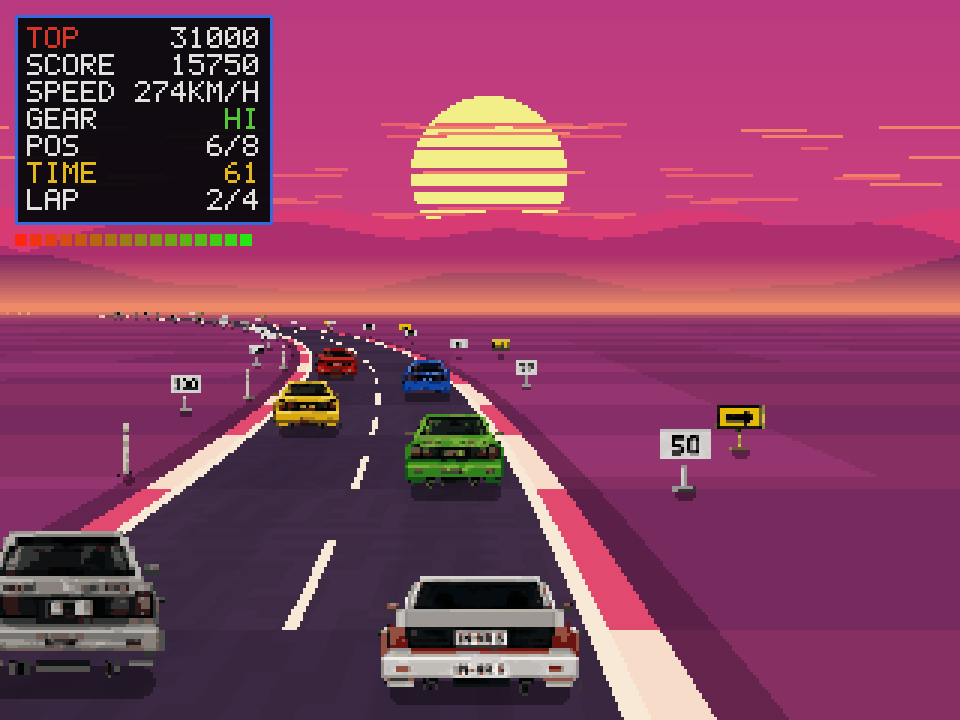
Each carries its own palette, backdrop and roadside furniture, and its own qualifying target — a single 73s/90s pair only means anything for a 4360m lap. The targets are measured rather than picked, calibrated so every circuit leaves the same margin.
The ranking tables are kept per circuit, since a Sunset score and a City score are not the same achievement.
The artwork is generated, not drawn by hand. See art/CREDITS.md.
Name and marks
Pole Position is a trademark of Bandai Namco, and Audi's marks are Audi's. Neither appears here: this is an original game, and the player's car is an unbadged Group-B-shaped rally car. See art/CREDITS.md.
"Quattro" here is Omarchy 4's own codename, which is where the title came
from — the plugin id is nosignal.quattro-gp, alongside the other Quattro-era
plugins. It is not a reference to the car, and the game names no manufacturer.
This is a game in the style of the 1982 arcade racers, not a port or a
conversion of one. Nothing here is derived from any original's code or assets:
the rules were researched from the public sources listed below, and the
artwork is generated by the scripts in art/.
What the original did
The rules here are researched, not remembered — one circuit (Fuji), 90 seconds of qualifying with a 73-second target, seven rivals, a grid slot from your qualifying time, a two-speed gearbox, puddles on the racing line, 50 points a car passed and 200 a second left on the clock.
- Pole Position — Wikipedia
- Pole Position II — Wikipedia
- Pole Position strategy guide — GameFAQs
- DIP switch settings — Museum of the Game
- Top speed by board revision — Arcade Museum forums
Licence
MIT.